
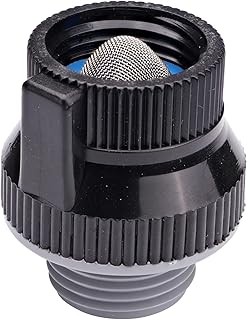
Raindrip R620CT — Anti-Siphon Backflow Preventer 3/4" (Hose Bib to Drip Irrigation)
4.3 ★ · 435 reviews
$9.59reference price
View on AmazonWhat is it and what's it for?
Think of it as a one-way valve for air, not just water: it's a small part that screws onto the hose bib, before everything else (timer, regulator, drip hose). While water is flowing toward the garden, it stays sealed; the instant you shut off the bib, it opens and lets air in to break any backward suction. Without this part, if mains pressure ever drops (a water main break down the street, for example), the water sitting in your drip hose — carrying dirt, fertilizer residue, or bugs — could get siphoned back into your house's drinking water line. This is exactly what most municipal plumbing codes require for any irrigation connection to an outdoor hose bib.
Real-world use cases
- At home: You have a drip kit for patio pots connected straight to the hose bib, no WiFi controller or electric valve involved. This backflow preventer screws in between the bib and the rest of the system (timer or hose) and stays there for good, no maintenance or batteries — it protects the house without you ever having to think about it again.
- In a business or workshop: A landscaper installing simple drip kits (no electric controller) in several planters at a building or business adds this as a standard part at every outdoor hose bib where they set up a system, because in many U.S. municipalities it's a plumbing code requirement and avoids a flag during an inspection.
How to avoid buying the wrong one
- Install it first, right at the hose bib, and let the timer, regulator, or hose come AFTER this part — never before.
- Don't put any shutoff valve or closed connection right after it: the vacuum breaker needs to be able to open freely to air or it stops working.
- If your drip kit (like the MIXC or Bonviee in this ranking) is already limited to 20-45 PSI, this backflow preventer doesn't replace a pressure regulator — they're two different problems (drinking water safety vs. kit pressure rating), and many setups need both.
The investment takeaway
Compared to running no protection at all (what most budget drip kits do by default, since none in this catalog include one), this under-$10 part avoids the real scenario of water from your planters — carrying dirt, bugs, or fertilizer if you ever add one — mixing with the water your family drinks during a pressure drop in the mains. This isn't a comfort or performance upgrade: it's the difference between a legal, safe irrigation setup and one that technically shouldn't be connected to the drinking water line without this protection.
Field glossary
Terms you'll hear about this equipment
So you can use the right vocabulary with a customer, a supplier, or a manual.
- GPH (Gallons Per Hour) — GPH — Galones por hora
- La cantidad de agua que una bomba puede mover en una hora — a mayor GPH, más rápido llena o vacía un espacio.